ProTee VX vs VTrack
By GolfSimulatorSource Editorial Team | Updated:
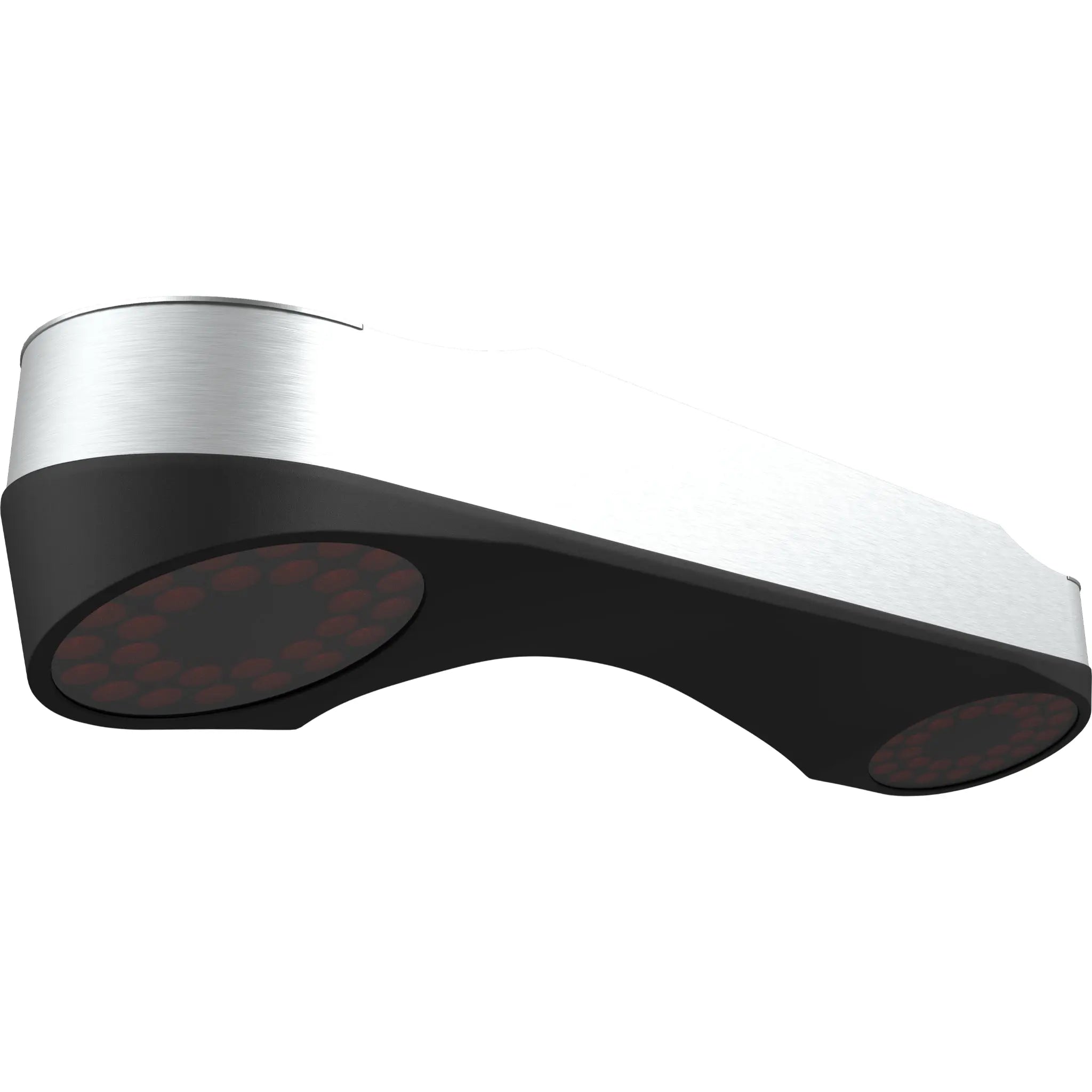
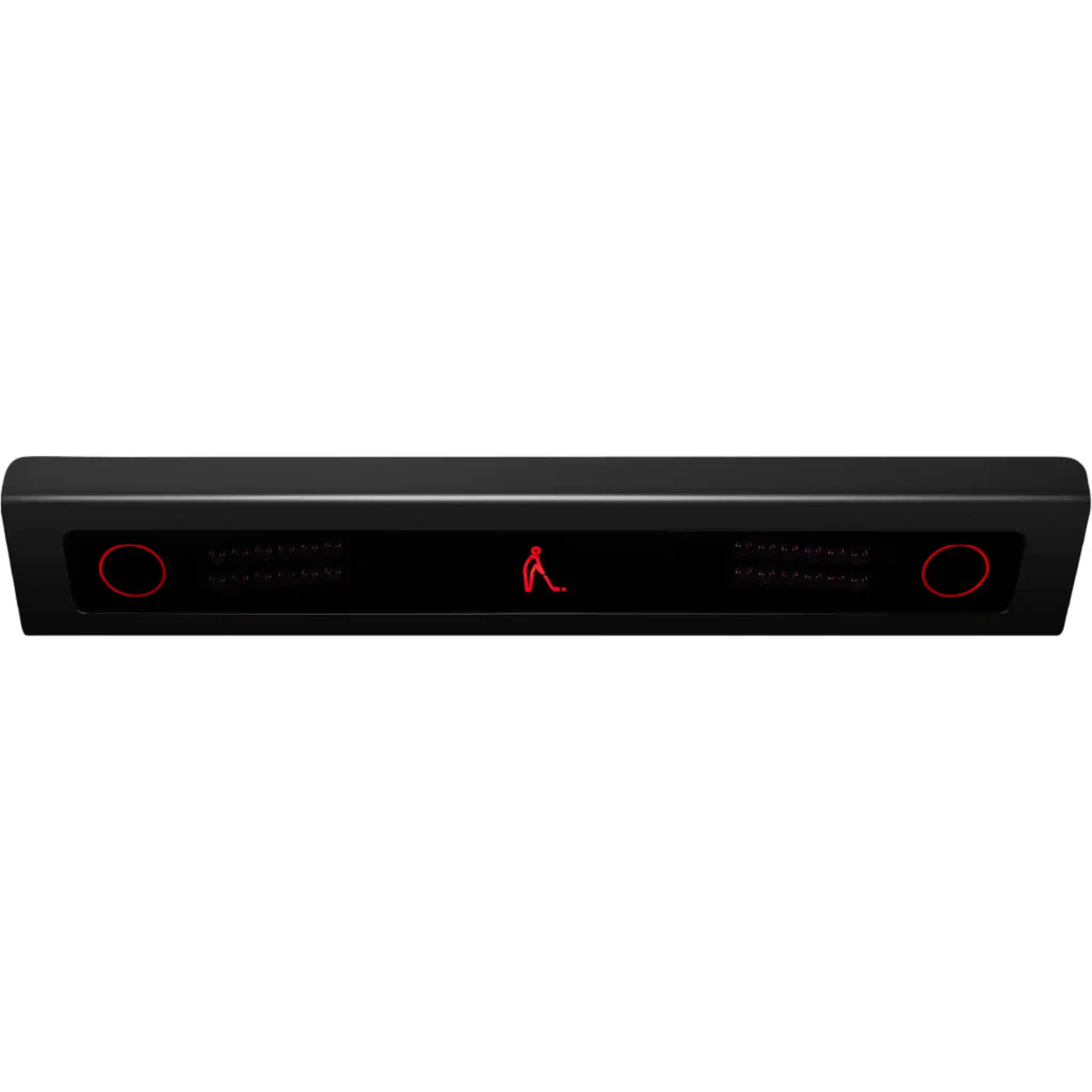
ProTee VX and VTrack are the two closest-priced overhead launch monitors on the market, and the pairing golfers actually debate — a recurring thread on r/golfsimulator asking whether to buy the Uneekor EYE XO, ProTee VX, or VTrack keeps circling back to VX vs VTrack once the $10,999 Uneekor is ruled out on price. Both are ceiling-mounted, camera-based systems that charge no ongoing subscription for their own software and connect to GSPro at no extra cost. The real decision is a trade: VTrack is $1,500 cheaper with a larger hitting zone, while ProTee VX brings a more mature, longer-established software platform and a longer US track record.
Key Differences
- 1Price and hitting zone move together in VTrack's favor: $5,000 vs $6,500 ($1,500 cheaper), and 31" x 24" (744 sq in) vs the VX's 25" x 21" (525 sq in) — about 42% more forgiving hitting area for off-center strikes on the mat.
- 2Software maturity moves the other way: ProTee Labs is described by community reviewers as the more polished, feature-rich native platform (customizable dashboards, heat maps, integrated swing-camera replay), while VTrack's included ToolKit and Practice Range software is called more basic by multiple sources — including retailers who sell it — with several owners reporting they migrated to GSPro fairly quickly rather than staying in VTrack's own range software.
- 3Track record is lopsided: ProTee has an established multi-year US presence, while VTrack (Laon SwingCraft) only entered the US market in September 2025 — its largest retailer's own product listing shows zero customer reviews specific to the unit, despite that retailer's 4.9-star rating across its full catalog.
- 4Ball tracking carries a caveat on both sides, but of different kinds: the VX confirmed-reads spin off a ball's existing printed markings via AI (not stickers, but not true blank-ball tracking either, despite 'no stickers needed' marketing language) — while VTrack markets itself as fully markerless, yet one independent reviewer reports the system actually relies on logo/marking contrast for spin detection and cautions against plain white balls and tees. That VTrack caution is single-sourced and unconfirmed elsewhere, but worth testing with your own ball before assuming full compatibility.
- 5Camera-spec transparency favors VTrack: it publishes a dual stereoscopic, up to 1,800fps rating, while ProTee has never disclosed the VX's built-in tracking camera frame rate — a citable gap next to VTrack specifically. (Uneekor's EYE XO2 doesn't publish a continuous FPS figure either — only a "2,500 frames at impact" burst-capture spec for Club Optix — so VTrack is the only one of the three overhead systems to disclose a true continuous frame rate.)
Quick Picks
Lowest price
VTrackVTrack at $5,000 undercuts the ProTee VX by $1,500 — a 23% discount with no subscription trade-off either way
Largest hitting zone
VTrackVTrack's 31" x 24" (744 sq in) zone is about 42% larger than the VX's 25" x 21" (525 sq in)
Software maturity
ProTee VXProTee Labs' customizable dashboards, heat maps, and swing-camera integration are consistently rated more polished than VTrack's more basic ToolKit/Practice Range software
Established US track record
ProTee VXProTee has a longer US history; VTrack only entered the US market in September 2025 with a thinner independent-review base
Independent accuracy validation
ProTee VXGolfstead's independent test found the VX within 1-2% of a Foresight GC3; no comparable lab-style test of VTrack has been published as of mid-2026
Built-in camera FPS disclosed
VTrackVTrack publishes up to 1,800fps for its dual stereoscopic cameras; ProTee has never disclosed the VX's built-in tracking camera frame rate
No recurring software fee
TieBoth bundle a lifetime/perpetual license for their own software and charge a genuine $0 fee to connect to GSPro
Head-to-Head Specs
Hardware & Specs
| ProTee VX | VTrack | |
|---|---|---|
| Price | $6,500 | $5,000✓ |
| Technology | Camera (dual high-speed overhead, AI-assisted) | Camera (dual stereoscopic overhead, up to 1,800fps) |
| Category | Premium ($2,000–$10,000) | Premium ($2,000–$10,000) |
| Best For | Buyers who want an overhead launch monitor with zero recurring software fees and no floor footprint | Buyers who want the largest hitting zone in the overhead category and zero recurring software fees, and who accept a newer brand with a thin independent-review track record in exchange for a $1,500-$6,000 price advantage over ProTee VX and Uneekor |
| Space Required | Minimum 9 ft ceiling height; unit mounts ~3'4"–3'7" in front of the hitting position | Minimum ceiling height ~8'10" (106", manufacturer spec); min. 118" impact-screen distance; ~213" recommended room width |
| Our Rating | 4.2/5✓ | 3.8/5 |
Software Compatibility
| ProTee VX | VTrack | |
|---|---|---|
| ProTee Labs | Native✓ | Not supported |
| GSPro | Native(tie) | Native |
| E6 Connect / E6 Apex | Compatible(tie) | Compatible |
| TGC 2019 | Compatible✓ | Not supported |
| CreativeGolf 3D | Compatible✓ | Not supported |
| VTrack ToolKit + Practice Range | Not supported | Native✓ |
| The Golf Club 2019 | Not supported | Compatible✓ |
Key Specs
| ProTee VX | VTrack | |
|---|---|---|
| Data points published | 24 total: ball speed, spin rate, backspin, sidespin, launch angle, launch direction, club speed, club path, face angle, face-to-path, attack angle, dynamic loft, lie angle, impact location, and others | 23 (manufacturer figure): 8 club data types (club speed, face angle, attack angle, path, dynamic loft, face-to-path, smash factor, impact location), 7 ball data types (ball speed, launch angle, launch direction, backspin, sidespin, total spin, spin axis), 8 shot/flight data types (carry, total distance, run, apex height, descent angle, flight time, lateral landing, shot shape). Some retailers round this to "24" or "25+" by counting derived/video metrics separately — the manufacturer's own figure is 23. |
| Ball speed | Yes ✓(tie) | Yes ✓ |
| Club speed | Yes ✓(tie) | Yes ✓ |
| Spin rate (backspin/sidespin) | Yes ✓(tie) | Yes ✓ |
| Launch angle | Yes ✓(tie) | Yes ✓ |
| Ball tracking method | Reads spin off the ball's existing printed markings (logo/line/number) via AI — not true individual-dimple photogrammetry despite 'no stickers needed' marketing language; completely blank balls are not reliable, especially at higher ball speeds | Marketed by the manufacturer and retailers as fully markerless ("works with any standard ball"). One independent reviewer (onthegreen.golf) reports the system actually relies on logo/marking contrast for spin detection and cautions against plain white balls or tees — single-sourced, not independently confirmed, treat as a practical caution rather than a contradicted spec. |
| Hitting zone | 25" x 21" (65 x 55cm) — large, described by one reviewer as 'almost matching the EYE XO2' | 31" x 24" (800x600mm) — manufacturer-marketed as the largest in the overhead category. One manufacturer-site instance also lists "31" x 21"," an inconsistency in the source material; retailers uniformly use 31" x 24". |
| Minimum ceiling height | 9 ft, mounted ~3'4" in front of the hitting position (~3'7" at 10 ft ceilings — 9ft is the floor, not an upper limit; taller rooms just need a longer standoff) | ~8'10" (106", converted from the manufacturer's 106"-122"/2.7-3.1m spec). Retailer FAQs vary 8'6"-9'+; use the manufacturer figure as the floor and budget a 9'+ buffer per common installer guidance. |
Software Maturity & Track Record
| ProTee VX | VTrack | |
|---|---|---|
| Native software feature depth | ProTee Labs — customizable dashboards, heat maps, integrated swing-camera replay (perpetual license)✓ | VTrack ToolKit + Practice Range — described by multiple sources as more basic; several owners migrate to GSPro |
| US market tenure | Established, multi-year US presence✓ | Entered US market September 2025 |
| Independent accuracy testing found | Golfstead: typically within 1-2% of Foresight GC3 (editorial review)✓ | No published lab-style or side-by-side test found as of mid-2026 |
| Built-in tracking camera FPS disclosed | Not publicly disclosed by ProTee | Up to 1,800fps, dual stereoscopic (manufacturer spec)✓ |
| Owner review volume (largest retailer listing) | Owner accounts documented across multiple retailers and forums✓ | Zero customer reviews on VTrack-specific Golf Sim Depot listing as of this research |
Who Should Buy Which?
You want the largest hitting zone at the lowest price
VTrack
VTrack's 31" x 24" (744 sq in) hitting zone is roughly 42% larger than the VX's 25" x 21" (525 sq in), and it costs $1,500 less. For buyers who mishit off-center on the mat and want maximum forgiveness at the lowest entry price in the overhead category, VTrack is the stronger spec sheet.
You want the more mature, established software experience
ProTee VX
ProTee Labs' customizable dashboards, heat maps, and integrated swing-camera replay are consistently described by reviewers as the more polished native platform of the two. VTrack's included ToolKit/Practice Range software is called more basic by multiple sources — several owners have moved to GSPro fairly quickly rather than living in VTrack's own software long-term.
You want independent, lab-style accuracy validation before buying
ProTee VX
Golfstead's independent review found the VX's readings typically within 1-2% of a Foresight GC3. No comparable side-by-side accuracy test of VTrack against a Trackman, Foresight, or GC-series reference unit has been published as of mid-2026 — the available VTrack feedback is manufacturer specs and first-person owner accounts, not instrumented testing.
You're nervous about buying from a brand new to the US market
ProTee VX
ProTee has a longer, more established US presence. VTrack (Laon SwingCraft) entered the US in September 2025, and its largest retailer's product listing shows zero customer reviews specific to the unit as of this research — a concrete signal of how new the ownership base still is, even though the brand has exhibited at the PGA Show for three consecutive years.
You want the $0 GSPro connector fee and no subscription, period
Tie
Both units connect to GSPro natively at a genuine $0 fee from the manufacturer, and both bundle their own practice/range software under a perpetual or lifetime license with no recurring cost. Neither has a subscription-based cost advantage over the other — GSPro's own roughly $250/yr license applies equally either way.
You want the camera spec sheet fully disclosed before buying
VTrack
VTrack publishes a dual stereoscopic, up to 1,800fps camera rating. ProTee has never publicly disclosed the VX's built-in tracking camera frame rate — a citable transparency gap, even though it hasn't stopped independent reviewers from rating the VX's actual output as accurate.
You want to minimize risk around ball-marking dependency
ProTee VX
The VX's marking dependency is confirmed and documented by ProTee's own materials — you know exactly what you're getting. VTrack markets full markerless tracking, but one independent reviewer's single-sourced caution about plain white balls and tees means the VX's known limitation is arguably the safer, better-documented bet, even though neither unit needs adhesive stickers.
You're budget-constrained and comfortable being an early adopter
VTrack
If the $1,500 gap and larger hitting zone matter more than software polish or brand tenure, VTrack is a legitimate, well-specified budget-overhead pick — provided you're comfortable doing a bit more of your own due diligence on a brand with a thinner independent track record than ProTee's.
Bottom Line
This is the tightest matchup in the overhead launch monitor category, and there is no universal winner — it comes down to what you weight more. Buy VTrack ($5,000) if the larger 31" x 24" hitting zone and $1,500 price advantage outweigh a thinner independent track record and a more basic native software experience. Buy ProTee VX ($6,500) if you want the more mature ProTee Labs software platform, a longer-established US brand, and independent accuracy validation (Golfstead's test against a Foresight GC3) rather than manufacturer specs and early owner accounts. Neither unit carries a recurring software subscription, so the price gap between them stays fixed rather than compounding over time — unlike a comparison against the subscription-gated Uneekor EYE XO2.
Read the Full Reviews
For deeper specs, owner reception, and use-case detail on either product, our independent reviews go further than this side-by-side.
Frequently Asked Questions
Is the ProTee VX or VTrack more accurate?
There is no direct independent side-by-side test comparing the two units against each other. The VX has its own independent validation — Golfstead's review found it typically within 1-2% of a Foresight GC3. VTrack has no published lab-style accuracy test as of mid-2026; the available feedback is manufacturer specs and first-person owner accounts describing it as "deadly accurate," which is promising but not independently instrumented.
Do I need marked golf balls for the ProTee VX or VTrack?
The VX confirmed-reads spin off a ball's existing printed markings (logo, line, or number) via AI — a standard marked ball is required, and completely blank balls are not reliable. VTrack markets itself as fully markerless ("works with any standard ball"), but one independent reviewer reports the system actually relies on logo/marking contrast and cautions against plain white balls or tees. That caution is single-sourced and unconfirmed elsewhere, so test your preferred ball on either unit before assuming full compatibility.
Which has the bigger hitting zone, ProTee VX or VTrack?
VTrack's manufacturer-published 31" x 24" (744 sq in) zone is about 42% larger than the VX's 25" x 21" (525 sq in) — though one reviewer described the VX's zone as "almost matching the EYE XO2," so the VX is not a small hitting area in absolute terms, just smaller than VTrack's.
Does either the ProTee VX or VTrack require a software subscription?
No. Both bundle their own practice/range software under a no-cost license — ProTee Labs is perpetual, VTrack's ToolKit and Practice Range is a lifetime license — and both connect to GSPro natively at a genuine $0 fee. GSPro's own roughly $250/yr license applies equally to either setup and is not a VX- or VTrack-specific cost.
Which is the safer first purchase for a buyer new to overhead launch monitors?
ProTee VX carries less brand-tenure risk: it has a longer established US track record and independent accuracy testing (Golfstead vs. Foresight GC3) to point to. VTrack is a legitimate, well-specified alternative, but it entered the US market in September 2025 and its largest retailer's listing shows zero unit-specific customer reviews as of this research — buyers should factor in that thinner track record, not just the $1,500 price advantage.
Do the ProTee VX and VTrack cost the same to run over several years?
Yes, roughly — neither charges a recurring fee for its own software, and both connect to GSPro at $0 extra cost, so the $1,500 upfront price gap stays fixed rather than compounding. That is a meaningfully different picture than comparing either unit against the Uneekor EYE XO2, which gates third-party software behind an ongoing subscription tier.
More Comparisons
More comparisons with ProTee VX
More comparisons with VTrack
Affiliate disclosure: Some links are affiliate links. We may earn a commission at no extra cost to you. This does not influence our analysis. Our methodology
Stay Updated on Launch Monitor Prices
Get price drop alerts, new comparison articles, and launch monitor news.