Garmin Approach R50 vs Garmin Approach R10
By GolfSimulatorSource Editorial Team | Updated:
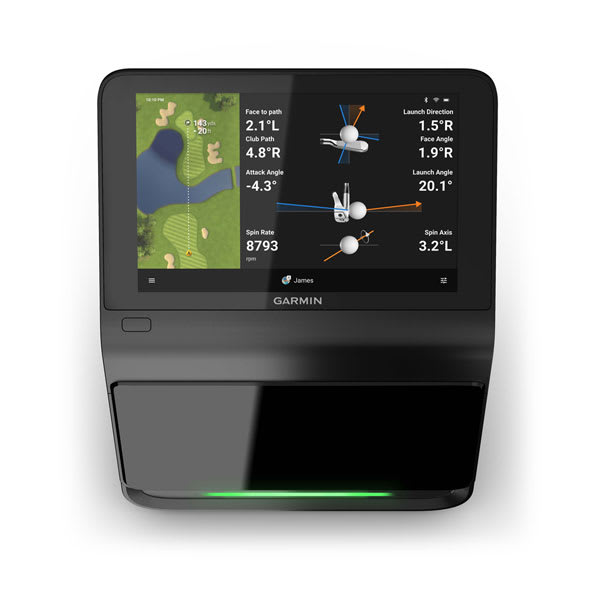
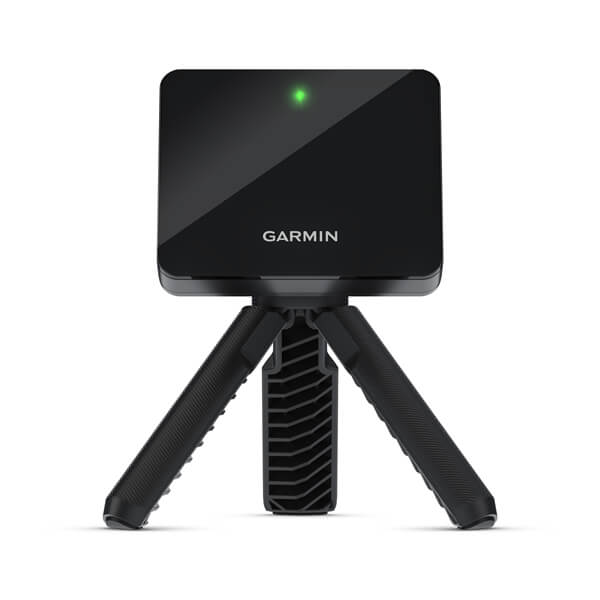
The Garmin Approach R50 and R10 share the Garmin name and sync to the same Garmin Golf app — but they are designed for entirely different golfers. The R10 ($499) is a pocket-sized radar handheld that created the sub-$500 home simulator category. The R50 ($4,999.99) is a 3-camera photometric launch monitor with a 10-inch built-in touchscreen and standalone Home Tee Hero simulator. At $4,500 apart in price, they barely compete — but many Garmin ecosystem owners ask whether the upgrade is worth it.
Key Differences
- 1R50 uses 3 high-speed photometric cameras and directly measures spin with any standard ball. R10 uses Doppler radar and ML-estimates spin indoors — Garmin's own data shows 30× spin accuracy improvement with RCT balls. This is the fundamental data quality difference.
- 2R50 has a built-in 10" color touchscreen running Home Tee Hero standalone — no phone, tablet, or PC needed. R10 has no display; every shot requires a paired smartphone.
- 3R50 weighs 9 lbs and requires AC power for extended sessions. R10 weighs 148g, fits in a pocket, and has a 10-hour battery. R10 is genuinely portable; R50 is transportable but not pocket-portable.
- 4R50 requires ~12 ft of room depth with behind-the-ball placement. R10 requires 14–16 ft (6–8 ft behind ball + 8 ft ball flight). Counterintuitively, R10 needs more room depth than R50.
- 5Both sync to the Garmin Golf app and Home Tee Hero ecosystem — this is the core integration. R50 runs Home Tee Hero natively; R10 streams it via Garmin Golf membership on your phone.
Quick Picks
Best value under $500
Garmin Approach R10R10 at $499 — the benchmark budget launch monitor with 43,000+ courses via $99/yr Garmin Golf membership
Best all-in-one home simulator (no PC needed)
Garmin Approach R50R50 with built-in 10" touchscreen runs Home Tee Hero standalone — no PC, phone, or projector required. R10 always needs a phone.
Best spin accuracy indoors
Garmin Approach R50R50 photometric cameras directly measure spin with any ball. R10 ML-estimates spin (shows in italics when calculated); 30× improvement with RCT balls.
Best outdoor portability
Garmin Approach R10R10 at 148g, IPX7 waterproof, 10 hours battery — clips to your bag and runs all day. R50 at 9 lbs with AC power is not a range companion.
Best room-depth efficiency
Garmin Approach R50R50 needs ~12 ft. R10 needs 14–16 ft (6–8 ft behind ball + 8 ft flight). Counterintuitive but R50 requires less total room depth.
Least annual ongoing cost
TieBoth use the same Garmin Golf membership ($99.99/yr) for Home Tee Hero access. The annual software cost is identical.
Best Garmin ecosystem integration
TieBoth sync to Garmin Golf app with full stat tracking. R50 adds high-speed impact video per shot. Different hardware strengths, same ecosystem.
Head-to-Head Specs
Hardware & Specs
| Garmin Approach R50 | Garmin Approach R10 | |
|---|---|---|
| Price | $4,999.99 | $499✓ |
| Technology | Photometric (3 high-speed cameras) | Radar (Doppler) |
| Category | Premium ($2,000–$10,000) | Budget (Under $500) |
| Best For | All-in-one home simulator with built-in display, no PC required | Budget home simulator & driving range |
| Space Required | ~12 ft minimum depth, indoor focus | 6–8 ft behind tee + at least 8 ft ball flight to net; ceiling depends on swing/enclosure |
| Our Rating | 4.3/5✓ | 4.2/5 |
Software Compatibility
| Garmin Approach R50 | Garmin Approach R10 | |
|---|---|---|
| Home Tee Hero | Native(tie) | Native |
| Garmin Golf app | Native✓ | Not supported |
| GSPro | Native✓ | Compatible |
| E6 Connect | Native(tie) | Native |
| Awesome Golf | Compatible | Native✓ |
| TGC 2019 | Not supported | Native✓ |
| FSX Play | Not supported(tie) | Not supported |
| Creative Golf 3D | Not supported | Native✓ |
Key Specs
| Garmin Approach R50 | Garmin Approach R10 | |
|---|---|---|
| Ball speed | Yes (measured, photometric) ✓(tie) | Yes (Doppler radar) ✓ |
| Spin rate | Yes — directly measured (not calculated) ✓(tie) | Partial — calculated indoors via ML ✓ |
| Spin axis | Yes (measured) ✓(tie) | Calculated (not directly measured) ✓ |
| Launch angle | Yes (measured) ✓(tie) | Yes ✓ |
| Carry distance | Yes ✓(tie) | Yes — 50% better with RCT balls ✓ |
| Total distance | Yes ✓(tie) | Yes ✓ |
| Club head speed | Yes (with face stickers) ✓(tie) | Yes ✓ |
| Club path | Yes (with face stickers) ✓(tie) | Yes (1–4° margin vs TrackMan) ✓ |
| Face angle | Yes (with face stickers) ✓(tie) | Yes (1–4° margin vs TrackMan) ✓ |
| Smash factor | Yes ✓(tie) | Yes (calculated) ✓ |
| Display | 10" color LCD touchscreen, 800 × 1280 px (built-in) | None — requires paired smartphone |
| Dimensions | 16.5" H × 10.6" W × 7.5" D | 3.5" × 2.8" × 1" (89 × 70 × 25 mm) |
| Weight | 9 lbs | 5.2 oz / 148g (without tripod) |
| Battery life | Up to 4 hours (lithium-ion); AC adapter included | Up to 10 hours |
| Connectivity | Bluetooth, Wi-Fi, HDMI output | Bluetooth, Wi-Fi, Micro-USB |
| Outdoor use | Yes — capable, but designed primarily for indoor simulator use | Yes — performs best outdoors |
Who Should Buy Which?
Budget is limited to under $1,000
Garmin Approach R10
R10 at $499 is the only realistic choice. $4,999.99 for the R50 is 10× the price. For golfers who want to start home simulation, the R10 + Garmin Golf membership ($99.99/yr) delivers 43,000+ courses and solid ball speed, carry, and launch data. The spin limitations are manageable for most recreational players.
You want a standalone simulator with no phone or PC
Garmin Approach R50
R50 is the only portable launch monitor on the market with a built-in simulator that runs without any connected device. The 10" color touchscreen runs Home Tee Hero standalone — 43,000+ courses, up to 4-player multiplayer, full data display. R10 requires a smartphone for every shot. If true all-in-one convenience is the goal, R50 is in a class by itself.
You primarily use the device outdoors
Garmin Approach R10
R10 (148g, IPX7, 10-hour battery) was designed for outdoor range use. It clips to a bag, survives rain, and runs all day without recharging. R50 is AC-powered primarily (4-hour battery for field trips), weighs 9 lbs, and has no waterproofing rated for sustained outdoor use. Outdoors is R10's natural habitat.
You want directly measured spin without RCT balls
Garmin Approach R50
R50 photometric cameras image the ball at impact and measure spin from actual ball markings — any standard ball works. R10 spin indoors is ML-estimated unless you use Titleist RCT balls ($55/dozen). Garmin's own data shows 30× spin accuracy improvement with RCT. If spin quality matters and you don't want ongoing ball costs, R50 eliminates the limitation entirely.
You want to use GSPro or E6 Connect
Garmin Approach R50
R50 officially supports GSPro and E6 Connect / Apex (added early 2026). Both integrations work via Wi-Fi + PC. R10 GSPro is via unofficial community bridge; E6 is officially supported. For cleaner official integrations with both GSPro and E6, R50 has the edge — but the practical difference is small for most users.
Your simulator room is 12–14 ft deep
Garmin Approach R50
R10 needs 6–8 ft behind ball + 8 ft ball flight = 14–16 ft minimum. R50 needs ~12 ft. For a 12–14 ft deep room, the R50 actually fits more easily than the R10 — counterintuitive given the price difference. If you have exactly 12–14 ft, R50's placement is more accommodating.
You want to buy once and not upgrade for 10 years
Garmin Approach R50
R50's photometric accuracy, club data completeness, and direct spin measurement represent a generation of hardware quality above the R10. For someone building a permanent home simulator who won't want to upgrade again, R50's technology ceiling is significantly higher. R10 is excellent value but its ML-estimated spin and radar-only data will feel limiting as your handicap drops.
You're a beginner just getting into home golf simulation
Garmin Approach R10
R10 at $499 is the right entry point. The Garmin Golf + Home Tee Hero ecosystem is excellent for beginners, the setup is under 5 minutes, and the data accuracy is more than sufficient for handicaps above 10. Spending $4,999.99 before you know if home simulation fits your lifestyle is unnecessary risk.
Bottom Line
The Garmin R10 ($499) and R50 ($4,999.99) are not competing products — they serve different golfers entirely. The R10 is the best entry-level home simulator and outdoor range tool for under $500. The R50 is a premium all-in-one indoor simulator with photometric accuracy, built-in display, and standalone operation. If you're asking which to buy: start with the R10 unless you already know you want a permanent indoor simulator setup, you need directly measured spin accuracy, or you specifically want the built-in simulator without a PC. Both sync to the Garmin Golf ecosystem — many serious Garmin golfers eventually own both: R10 for the range, R50 for the simulator room. The $99.99/yr Garmin Golf membership covers both devices.
Read the Full Reviews
For deeper specs, owner reception, and use-case detail on either product, our independent reviews go further than this side-by-side.
Frequently Asked Questions
Can the Garmin R50 replace the R10 for outdoor range use?
Technically yes, but practically no. R50 is 9 lbs, primarily AC-powered (4-hour battery when portable), and not designed for carrying to the range. R10 at 148g, IPX7 waterproof, and 10-hour battery is unmatched for outdoor portability. If you own an R50, you'll likely still want an R10 for range sessions.
Do the R50 and R10 use the same Garmin Golf membership?
Yes — one Garmin Golf membership ($9.99/mo or $99.99/yr) covers both devices. Shot data from both syncs to the same Garmin Golf profile. This is a genuine ecosystem advantage: you get the same Home Tee Hero access and stat tracking on both devices with one subscription.
How much more accurate is the R50 than the R10?
The gap is largest for spin data indoors. R50 photometric cameras directly measure spin with any ball. R10 ML-estimates spin indoors (shown in italics) — Garmin's own tests show 30× spin accuracy and 50% carry accuracy improvement when using RCT balls. For ball speed, carry distance, and launch angle, both are reliable — the R50 has an edge in precision but the R10 is adequate for most recreational golfers. The biggest accuracy gap is spin, which matters more for low-handicappers and fitting work.
Is the R50 worth 10× the price of the R10?
For a serious home simulator builder who wants direct spin measurement, no PC requirement, and club data completeness — yes, the R50 at $4,999.99 is a legitimate investment. For a casual golfer who wants to improve and hit shots at home — the R10 at $499 provides 80% of the experience at 10% of the cost. The R50 is not 10× better at ball data; it is 10× more convenient for all-in-one standalone operation.
Which is better for club fitting — R50 or R10?
R50 by a clear margin. Directly measured spin (any ball), accurate club path, face angle, angle of attack, dynamic loft, and high-speed impact video per shot are all standard on the R50. R10 club data is measured (path, face angle, attack angle) but at a wider margin vs tour equipment (1–4° documented). For fitting work where spin accuracy and data completeness matter, R50 is the professional-grade Garmin option.
Does the R50 firmware have issues I should know about?
Yes. Firmware v4.0.3 (late 2025 / early 2026) had real reported bugs: short-putt misreads, mid-round Wi-Fi dropouts, and standby drops. Firmware v4.80 (January 23, 2026) partially addressed these but community reports on GolfWRX indicate occasional issues persist post-v4.80. The R10 has a much longer track record of stable firmware — it's been shipping since 2021 with continuous improvement and fewer reported reliability issues.
Does the Garmin R50 work with FSX Play or TGC 2019?
FSX Play is not compatible with the R50 — it's a Foresight Sports ecosystem exclusive. TGC 2019 is also not officially supported or documented for the R50. The R50 supports Home Tee Hero (native), GSPro (official), E6 Connect / Apex (official as of early 2026), and Awesome Golf. If you specifically want FSX Play, the Bushnell Launch Pro or Foresight GC3 are the devices to consider.
More Comparisons
More comparisons with Garmin Approach R50
More comparisons with Garmin Approach R10
Affiliate disclosure: Some links are affiliate links. We may earn a commission at no extra cost to you. This does not influence our analysis. Our methodology
Stay Updated on Launch Monitor Prices
Get price drop alerts, new comparison articles, and launch monitor news.